
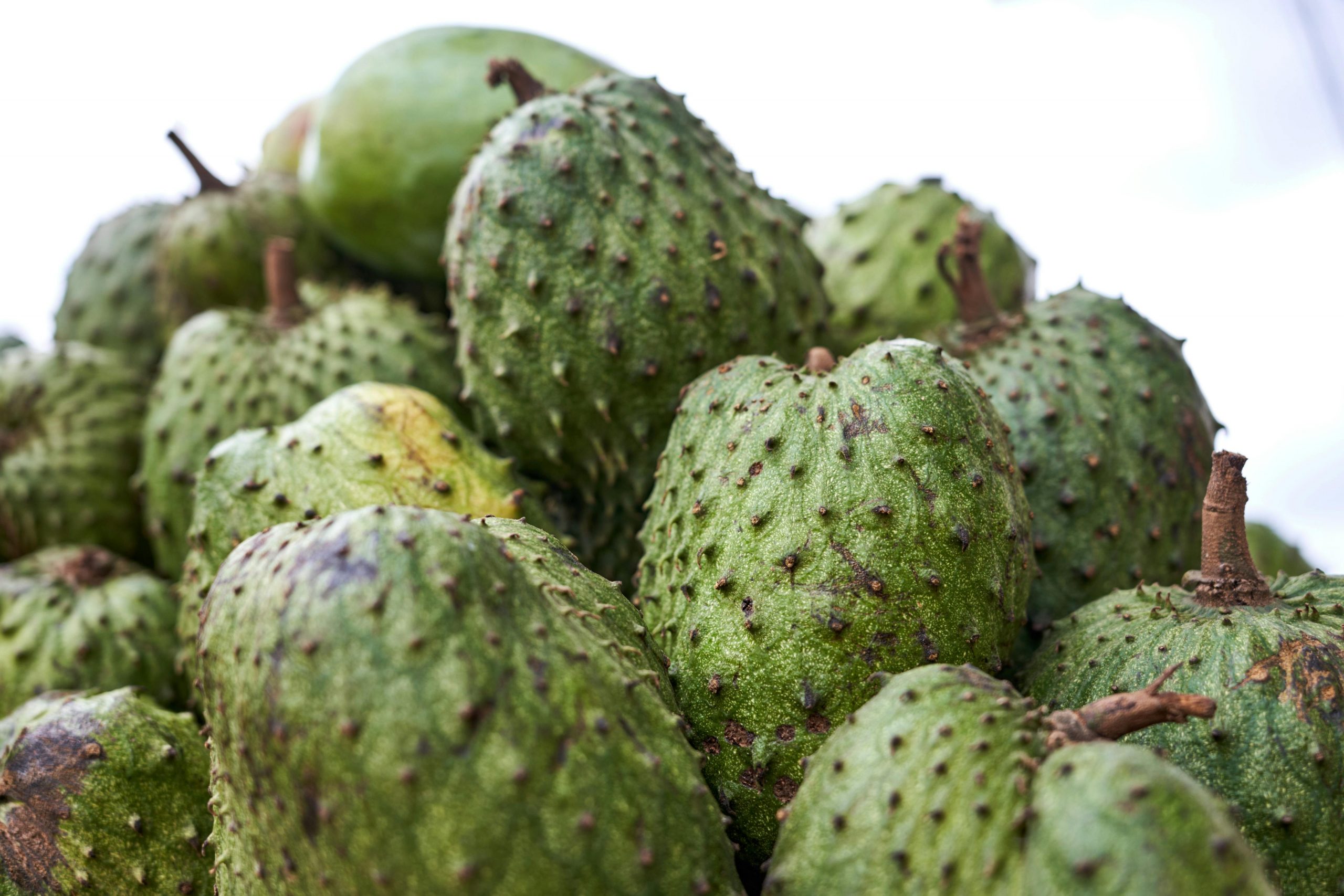
What it is: Guanábana—also called soursop or graviola—is a tropical fruit tree in the custard-apple family. The fruit is eaten as food; the leaves, bark, and seeds are used in folk medicine and sold as teas, tinctures, and capsules.
What people use it for
- Traditional/folk uses: pain and inflammation, sleep, high blood pressure, blood sugar control, infections (viral, bacterial, parasitic), and as a general “immune” or “cancer” remedy. These uses come from tradition and lab studies—not from strong human clinical trials. MedicineNetMemorial Sloan Kettering Cancer Center
What the evidence says (straight talk)
Cancer
- What we know: Extracts of guanábana (especially acetogenins like annonacin) can kill or slow cancer cells in test tubes and animals. That is not the same as proof in humans. Major cancer centers and charities state there’s no reliable evidence that graviola treats cancer in people; it should not replace standard care. Memorial Sloan Kettering Cancer CenterCancer Research UK
- Any human data? A few small studies/case reports and a limited safety trial exist, but they do not show proven benefit as a cancer treatment. Think of them as preliminary and low-quality for efficacy. PMC
Infections (herpes, parasites, bacteria)
- Lab/animal research shows antimicrobial and antiparasitic activity from plant extracts, but clinical trials in humans are lacking. Don’t use guanábana in place of diagnosis or prescription treatment. Memorial Sloan Kettering Cancer Center
Blood pressure & blood sugar
- Animal studies suggest hypotensive and hypoglycemic effects. If you take meds for hypertension or diabetes, graviola could add to the effect—monitoring and clinician guidance are required. Human evidence is insufficient to recommend it as therapy. Memorial Sloan Kettering Cancer Center
Bottom line: Treat guanábana as a nutritious fruit and a traditional remedy with promising lab data, but not a proven medicine for cancer or infections. Cancer Research UK
Safety & contraindications (read before using)
- Neurotoxicity / Parkinsonism concern: Chronic or heavy intake of Annonaceae products (fruit, teas, leaf/seed extracts) has been linked to atypical parkinsonism in the French Caribbean; annonacin and related compounds are implicated in dopaminergic neuron toxicity in lab and animal studies. Risk appears higher with leaves/teas/supplements than occasional fruit intake. PubMedOxford AcademicPMC
- Drug interactions: May lower blood sugar and blood pressure (additive with antidiabetic/antihypertensive drugs). Discuss with your clinician if you take these meds. Memorial Sloan Kettering Cancer Center
- Imaging tests: Animal data suggest altered biodistribution of radiotracers; avoid graviola supplements before nuclear imaging (e.g., some PET scans). Memorial Sloan Kettering Cancer Center
- Pregnancy/children: Avoid leaf teas/supplements in pregnancy and young children due to insufficient safety data. Do not eat the seeds (toxic). University of Texas at El Paso
- Regulatory note: The FDA has warned companies for marketing soursop/graviola with cancer-treatment claims. Supplements are not approved medicines. U.S. Food and Drug Administration+1
Forms & how practitioners approach it
- Food: Ripe fruit pulp (remove all seeds) in smoothies, juices, or desserts. Normal food amounts are generally considered fine for most healthy adults. University of Texas at El Paso
- Teas/tinctures/capsules (leaves, bark): Quality and potency vary widely; no standard therapeutic dose is established. If considered at all, clinicians typically use short courses, monitor blood pressure/glucose, and discontinue with any neurologic symptoms (tremor, rigidity, slowness). Chronic daily use is discouraged. Memorial Sloan Kettering Cancer Center
Counseling points you can share with patients/clients
- Do not replace prescribed treatments (especially for cancer or infections) with guanábana. Evidence in humans is insufficient. Cancer Research UK
- If you still choose to use a supplement, involve your clinician—review meds for interactions, set a time-limited trial, and monitor BP, glucose, and any neurologic symptoms. Memorial Sloan Kettering Cancer Center
- Prefer food over supplements; keep portions moderate and avoid seeds. University of Texas at El Paso
- Pause supplements before nuclear imaging unless your medical team says otherwise. Memorial Sloan Kettering Cancer Center
Quick nutrition snapshot (for context)
The fruit pulp provides vitamin C, fiber, and potassium, supporting everyday wellness when eaten as food—not as medicine. (Approx. per 1 cup: ~46 mg vitamin C, ~7 g fiber, ~626 mg potassium.) Nutrition Value